In July 2025, BYD announced that its "God's Eye" smart driving vehicle fleet had surpassed 1 million units. From the 70,000-RMB Seagull to the 300,000-RMB Han L, every model comes standard with 12 cameras and 5 mmWave radars. High-level ADAS is no longer a luxury exclusive. As Changan, Geely, and Great Wall rapidly follow suit, a "smart driving democratization" wave is sweeping the entire automotive industry.
For overseas OEM buyers and hardware engineers, this sends a clear signal: in-vehicle camera module demand is climbing exponentially. The global market will grow from $6 billion in 2023 to $13.7 billion by 2030, with China's shipments expected to exceed 100 million units in 2025. But the flip side is stark: while per-vehicle camera counts surge past 12, costs are being squeezed to the limit. Volume up, price down — this is the core challenge facing the camera module supply chain.
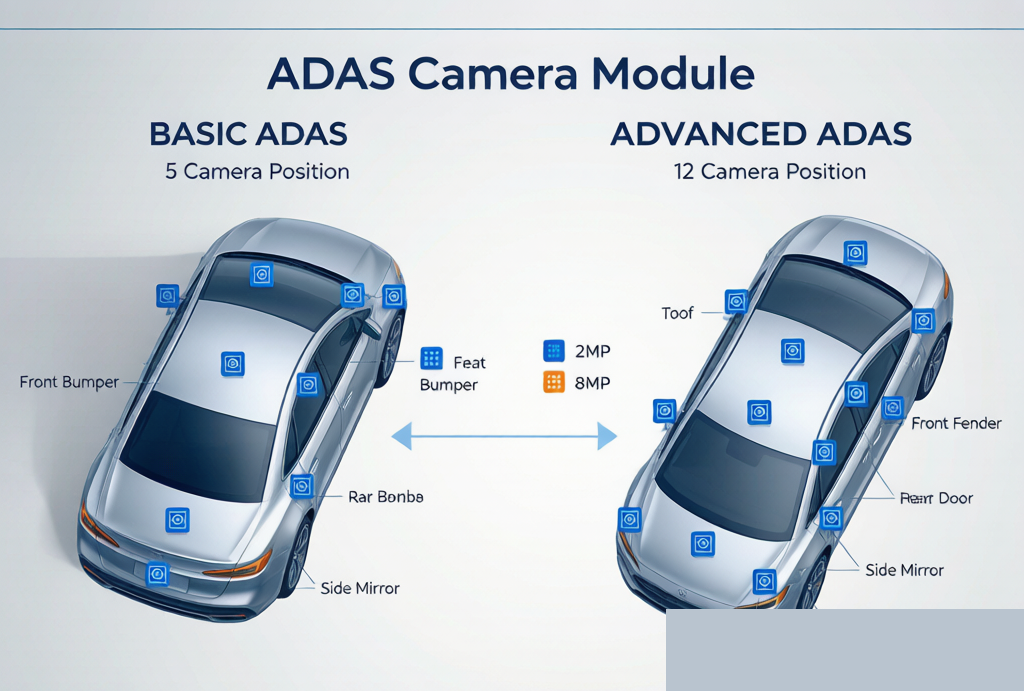
Why it's a trap: The direct consequence of smart driving democratization is a surge in per-vehicle camera count. L1-L2 ADAS requires only 1-5 cameras, while L3+ vehicles typically carry 8-15. BYD's God's Eye C comes standard with 12. This means a single vehicle model's camera module demand has more than doubled.
Where the trap lies: Many buyers underestimate ramp-up difficulty. Camera modules cannot be simply stockpiled like standard components — each unit requires optical calibration, Active Alignment (AA), aging, and final inspection, with cycle times measured in days. When OEMs demand monthly deliveries jumping from hundreds of thousands to over a million units, the bottleneck is rarely assembly — it's AA equipment and optical inspection machines. A single high-precision AA machine costs hundreds of thousands of dollars, and any delay in expansion decisions leads to delivery gaps.
How to break through: Buyers should make "capacity elasticity" a core evaluation dimension. Three key actions: first, require suppliers to provide current AA machine count and maximum daily capacity, along with a scalable expansion plan executable within 3 months; second, verify mixed-model production capability — different camera types (front, surround, side, rear) have different specs, and the ability to flexibly switch on the same production line directly determines delivery stability; third, lock in critical material lead times (CIS chips, lens assemblies) to prevent "equipment idle, no materials" scenarios.
Why it's a trap: Democratization isn't just about quantity — it's about performance. Front cameras are shifting from 2MP to 8MP, with NIO ET7 and Li Auto L9 standardizing 11 cameras at 8MP each. Surround cameras are upgrading from 1MP to 3MP. Pixel doubling means assembly precision requirements grow geometrically.
Where the trap lies: 8MP CIS chips have larger die sizes, demanding higher lens resolving power, which means AA alignment precision must improve from ±5μm to ±2μm. Any misalignment causes visible chromatic aberration and resolution drop at image edges, directly impacting ADAS algorithm accuracy. A more insidious trap lies in soldering — high-pixel chips have finer pad pitches (0.3mm or less), and slight reflow temperature curve deviations cause bridging or cold joints. These defects often don't surface in room-temperature testing, only emerging as batch failures after thermal cycling.
How to break through: For high-pixel module mass production, focus on three process capabilities: first, whether AA equipment achieves ±2μm precision with real-time closed-loop correction; second, whether a complete thermal cycling aging test protocol exists (-40°C to 105°C, minimum 500 cycles) with batch-level traceability; third, whether the choice between CSP (Chip Scale Package) and COB (Chip on Board) packaging routes is rational — CSP suits compact high-integration scenarios but is difficult to rework, while COB offers more flexibility but demands stricter cleanroom standards.
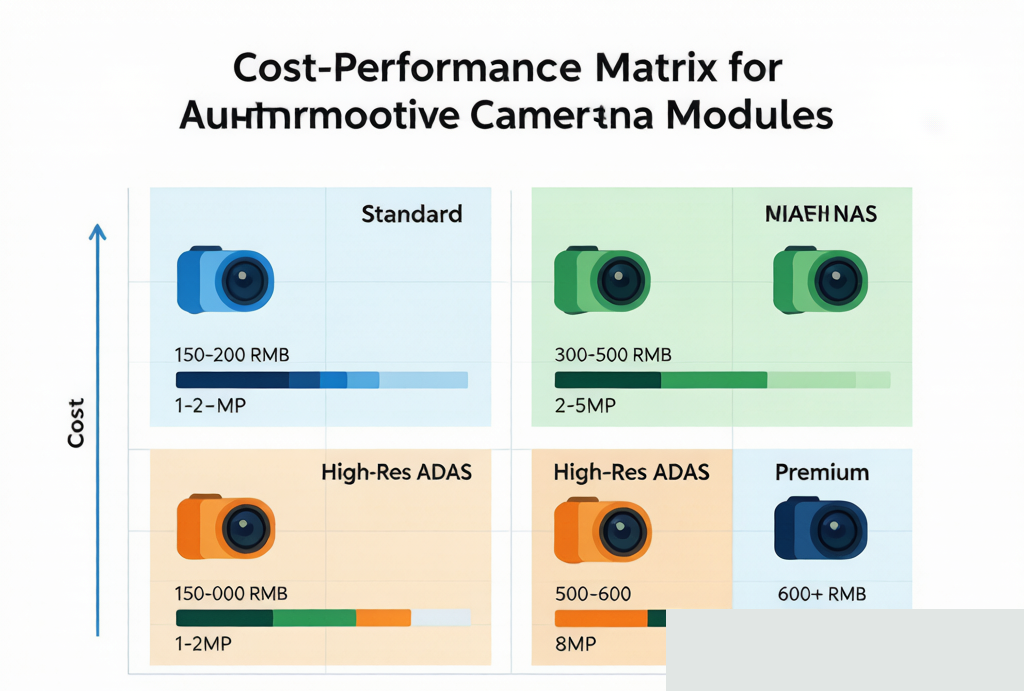
Why it's a trap: Smart driving democratization pushes ADAS from 300,000-RMB vehicles down to 100,000-RMB models. When even the 70,000-RMB Seagull comes with 12 cameras, cost pressure cascades through every supply chain tier. Standard cameras cost ¥150-200, ADAS-grade ¥300-500, and 8MP reaches ¥600 — a single vehicle's camera BOM easily exceeds ¥5,000, which entry-level models can't absorb.
Where the trap lies: When cost pressure hits module makers, the most dangerous pitfall is "invisible downgrading." Some suppliers cut costs by loosening AA precision tolerances, shortening aging test durations, or using substitute CIS chips. These changes are invisible at factory exit testing, but after six months of real-world operation, image degradation, color shift, and cold-start failures emerge. Worse, some cost-reduction approaches perform normally at room temperature but fail catastrophically in automotive temperature ranges (-40°C to 105°C) due to optical adhesive refractive index drift and lens thermal expansion mismatch.
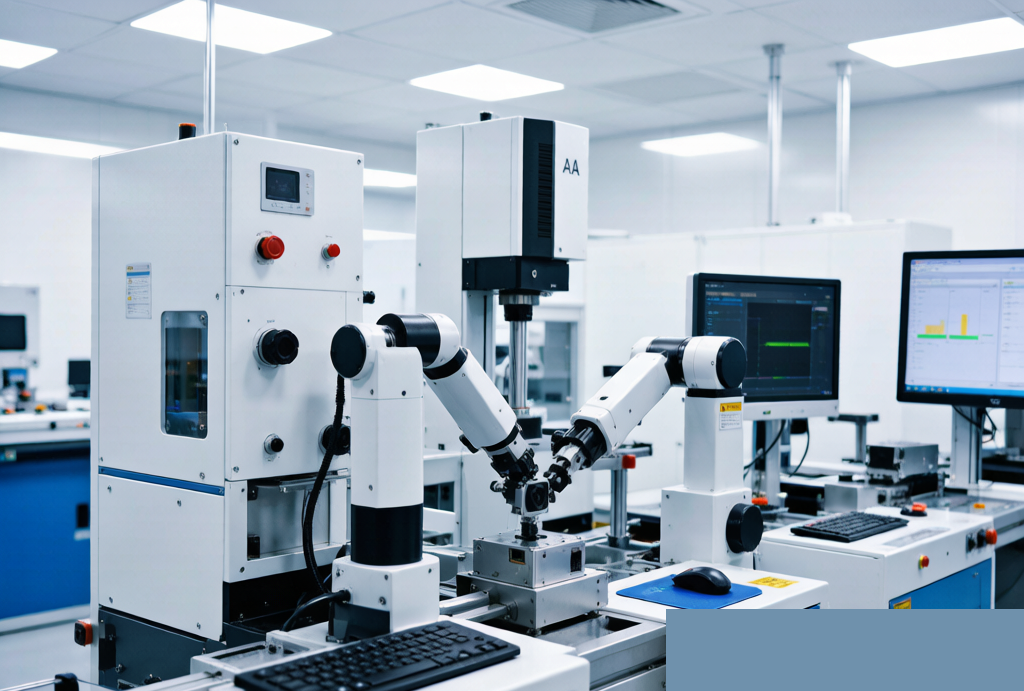
How to break through: The answer isn't simple price comparison — it's establishing a "total cost of ownership" evaluation framework. First, require a complete BOM cost breakdown with CIS chip, lens, FPC, and connector brand/model identification to eliminate material substitution risk; second, make automotive-grade reliability testing (AEC-Q100/200) a hard entry requirement with third-party test reports; third, evaluate supplier automation levels — highly automated lines require more upfront investment but deliver stable yields and lower labor costs, resulting in lower per-unit cost over time.
Why it's a trap: A single vehicle with God's Eye C needs front-view tri-camera (wide + telephoto), surround-view quad-camera, side-view dual-camera, rear-view, and cabin DMS — up to 7-8 different camera module specifications. Each has different focal lengths, FOVs, resolutions, and interface types, yet OEMs demand synchronized delivery. This requires module makers to rapidly switch models on the same production line.
Where the trap lies: The biggest pitfall of mixed-line production is "changeover loss." Each model switch requires recalibrating AA parameters, replacing fixtures, and adjusting test tooling — traditional lines may need 2-4 hours of downtime per switch. If 4-5 model switches are needed daily, effective capacity can drop by over 30%. A deeper issue is quality consistency — different models have different calibration baselines, and manual switching introduces human variance, causing yield fluctuations across models within the same batch.
How to break through: Leading module makers solve this through three mechanisms: first, MES (Manufacturing Execution System)-driven automatic changeover, with model parameters pre-loaded for automatic recipe loading, compressing switch time to under 30 minutes; second, modular fixture design with quick-change structures, keeping physical swaps under 10 minutes; third, SPC (Statistical Process Control) real-time monitoring, with key parameters (AA offset, focal deviation, MTF value) uploaded in real-time, triggering immediate alerts when control limits are breached.
"Smart driving democratization" is not a marketing slogan — it's a real force reshaping the entire in-vehicle camera supply chain. From 5 to 12 cameras, from 2MP to 8MP, from ¥150 to ¥600 — behind every number lies a module maker's precise balance between capacity, process, cost, and flexibility.
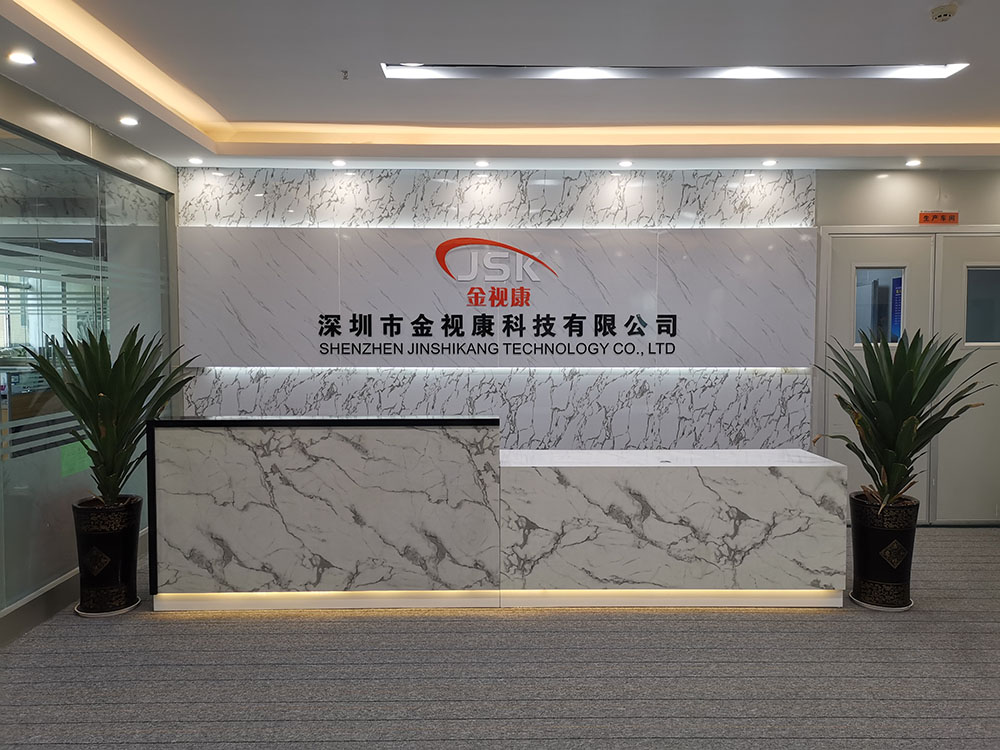
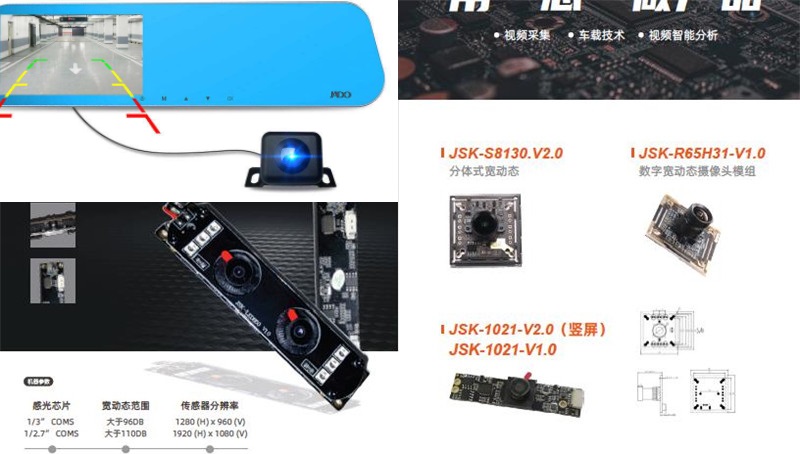
Jinshikang Technology specializes in camera module manufacturing, covering consumer electronics, automotive, security, and industrial inspection applications, with OEM/ODM capabilities. Facing the volume-up cost-down challenge of smart driving democratization, we deliver stable supply and quality assurance to overseas clients through highly automated production lines, automotive-grade reliability control, and flexible mixed-model manufacturing.


AR0230---1/2.7 HD 2M Wide Dynamic
Fatigue Monitoring Camera Module
Motion DV Camera-720P-120 Degree Wide Angle Camera Module
Night Vision Monitoring Camera Module
Monitoring - Doorbell - Law Enforcement Instrument Camera Module
Ten Thousand Trillion Industrial Camera Camera Module
 13423810014
 0755-29433686
 daming@cameras-module.com
 2/F, Building H, Zhiyihan Industrial Park, Yuanling Village, Shiyan Town, Baoan District, Shenzhen 518108



We use cookies to enhance your browsing experience. Continuing to browse indicates that you agree to our cookie policy.