On August 10, 2026, multiple media outlets reported that LG Innotek will exclusively supply variable aperture main camera modules for the iPhone 18 Pro — marking the first time iPhone series introduces a physically variable aperture structure. Unlike previous approaches relying on software algorithms to simulate bokeh, the new module controls light intake through mechanical structure, reportedly significantly improving daytime clarity and background bokeh effects. Reports also noted that due to the complexity of module assembly processes, both unit pricing and supply chain share are expected to increase simultaneously.
Behind this news lies a structural technology upgrade window for consumer electronics camera modules. For OEM/ODM procurement teams and hardware engineers, variable aperture filtering down from flagship smartphones to mid-to-high-end products is only a matter of time — and the complexity of selection decisions and supply chain planning is far greater than simply "swapping a lens."
The following three hurdles are the most easily underestimated in the journey of variable aperture modules from concept to mass production.
Why it is a trap: The fundamental difference between variable aperture modules and traditional fixed aperture modules lies in the internal micro-mechanical motion structure — typically a blade-type or rotating-ring aperture assembly. This structure must achieve precise aperture opening and closing within millimeter-scale space while withstand daily drops, vibrations, and temperature cycling. Many teams focus only on aperture stop counts and optical performance during selection, overlooking mechanical lifetime as a hidden metric.
Where the trap lies: The most common failure mode is aperture blade sticking. Causes are typically threefold: first, microparticle contamination — insufficient cleanroom standards during module assembly allow dust or solder particles into the aperture mechanism; second, lubricant migration or drying after thermal cycling, increasing blade friction; third, impact deformation from drops causing blade distortion or hinge loosening. These failures may not surface in standard lab testing due to small sample sizes and limited test durations. But at million-unit production scale, even a 0.5% failure rate means tens of thousands of after-sales returns.
How to break it: Procurement specifications must elevate mechanical reliability from "reference item" to "hard metric." Specifically: require suppliers to provide cycle life test data for the aperture mechanism — recommend no less than 100,000 open-close cycles, with post-test blade displacement deviation within tolerance. Vibration and drop tests must include "post-drop aperture function verification" — not just visual integrity. Environmentally, require suppliers to specify cleanroom classification (recommend Class 1000 or above) and provide dual cleanroom control for both incoming materials and assembly processes. For lubrication, require thermal gravimetric analysis data confirming stable performance from -40°C to 85°C. Finally, add extended reliability testing of 500+ units during pilot validation, specifically tracking aperture-related defects.
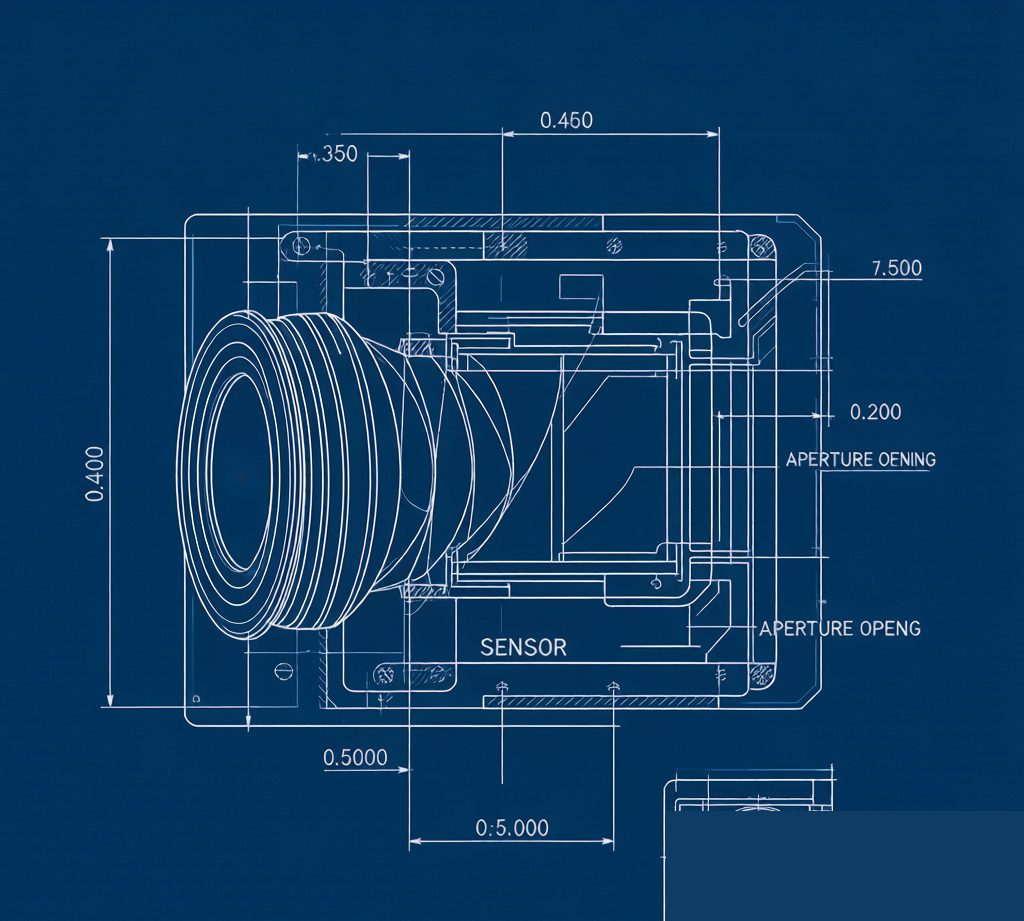
Why it is a trap: Variable aperture modules demand an order of magnitude higher assembly precision than fixed aperture modules. Concentricity between the aperture assembly and lens, parallelism between the aperture plane and sensor plane, and stroke consistency of the motion mechanism — any dimensional deviation beyond limits causes uneven corner bokeh at best, or aperture jamming and light leakage at worst. Many module makers achieve precision targets at the prototype stage but fall off the "precision cliff" during volume ramp.
Where the trap lies: The root cause of the precision cliff is that variable aperture modules introduce additional alignment dimensions absent in traditional camera modules. Fixed aperture modules only require AA (Active Alignment) between lens and sensor; variable aperture modules additionally require alignment between the aperture mechanism and lens, plus calibration of the aperture's initial zero position. This means AA equipment must be upgraded to multi-axis, multi-DOF alignment systems, with longer alignment cycles and higher equipment investment. If a module maker's AA equipment only has traditional 4-axis or 6-axis platforms, they face precision bottlenecks on variable aperture products. Another common issue is incoming material consistency: if blade thickness, flatness, or surface roughness varies between batches, post-assembly motion consistency cannot be guaranteed.
How to break it: Conduct deep process capability audits during the selection stage. First, confirm AA equipment configuration — whether it supports independent aperture mechanism alignment, number of alignment DOFs, and in-line calibration capability. Second, examine incoming material control — whether the aperture assembly has IQC full inspection or sampling plans, and whether Cpk for critical dimensions exceeds 1.33. Third, require suppliers to provide mass production yield simulation data, focusing on whether aperture-related defect ratios are controllable. Fourth, specify "precision guarantee clauses" in contracts — including upper and lower spec limits for concentricity, parallelism, and stroke consistency, plus outgoing sampling plans. For brands building their own production lines, recommend stationing process engineers at the module maker during NPI to participate in alignment parameter debugging and lockdown.

Why it is a trap: Everyone knows that variable aperture module BOM costs are significantly higher than fixed aperture modules. But many procurement teams only see the "module unit price increase" above the waterline, missing the hidden costs below: scrap costs during yield ramp, test equipment investment, after-sales repair costs, and pricing risks from single-source supply chains.
Where the trap lies: The most underestimated hidden cost is the "yield ramp curve." Variable aperture modules typically require 2-3 months longer yield ramp cycles than fixed aperture modules. During this window, yields may climb gradually from 60% to 90%+, and who bears the scrap costs? If contracts only specify target mass production yields without agreed cost-sharing mechanisms for the ramp period, the brand may absorb all ramp losses. Another hidden cost is test equipment: variable aperture modules require additional aperture function test stations (open-close response, position accuracy, light leakage detection), and the development costs for these test fixtures and software are easily overlooked. For after-sales: variable aperture module repair difficulty far exceeds fixed aperture modules — once the aperture mechanism fails, on-site repair is typically impossible, requiring full module replacement at 2-3x the cost. Finally, supply chain risk: currently only a handful of manufacturers can mass-produce variable aperture modules, meaning single-source supply chains with weak negotiating power and passive delivery timelines.
How to break it: Conduct total cost of ownership (TCO) analysis rather than just comparing module unit prices. First, require suppliers to provide yield ramp curve forecasts and ramp-period cost-sharing plans, with contractually agreed cost-bearing ratios for ramp scrap. Second, plan test equipment investments proactively — include aperture function test stations in production line investment budgets, rather than procuring them last-minute before mass production. Third, build an after-sales cost model — estimate annual return rates based on reliability test data, multiply by per-unit repair cost, and incorporate into product lifecycle cost accounting. Fourth, develop at least a second source at the supply chain level — even if initial mass production capability is insufficient, introduce a second supplier for process validation during NPI to avoid single-source lock-in. For resource-constrained brands, if short-term variable aperture costs are unaffordable, consider a transitional "software algorithm bokeh + large-format sensor" approach, switching after sales volume can amortize module costs.
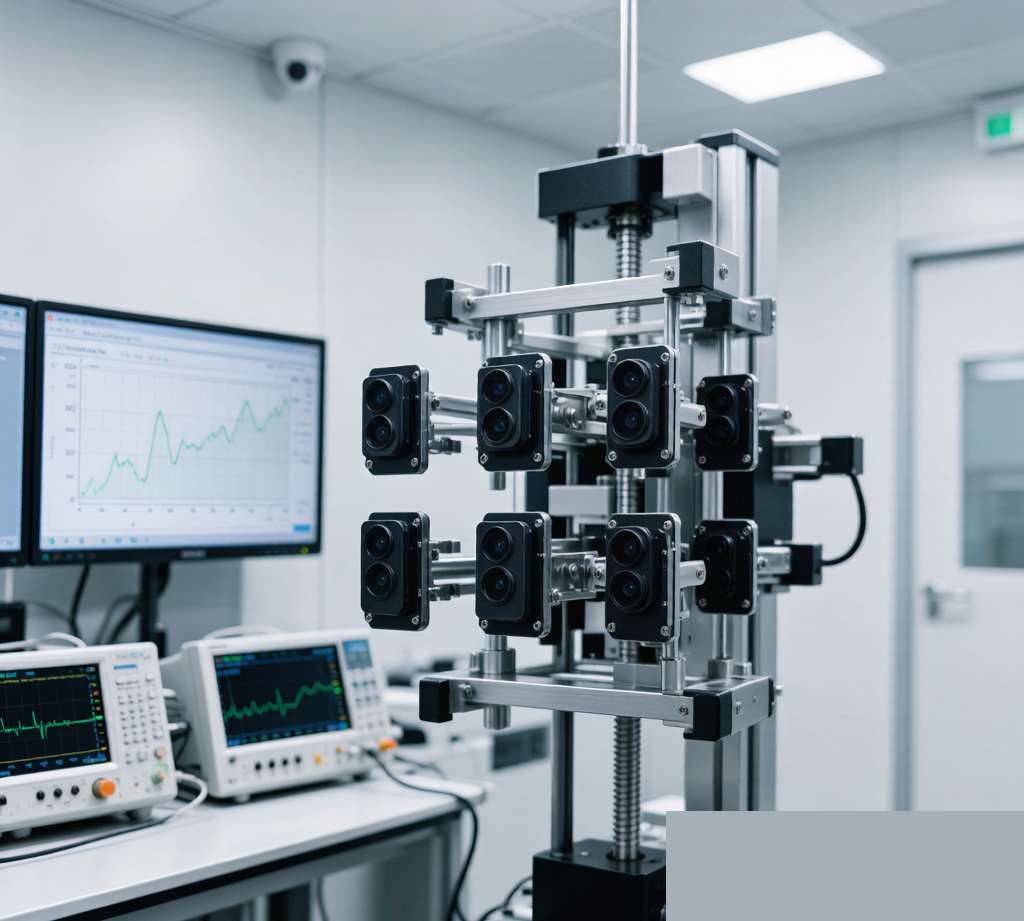
The journey of variable aperture from flagship debut to mainstream adoption hinges not on optical design, but on systematic capabilities in mechanical reliability, assembly precision, and cost control. Jinshikang Technology brings years of deep expertise in camera module OEM/ODM manufacturing, with multi-axis AA alignment, Class 1000 cleanroom assembly, and extended reliability testing capabilities — providing brands with end-to-end support from variable aperture module selection evaluation through volume production ramp.


AR0230---1/2.7 HD 2M Wide Dynamic
Fatigue Monitoring Camera Module
Motion DV Camera-720P-120 Degree Wide Angle Camera Module
Night Vision Monitoring Camera Module
Monitoring - Doorbell - Law Enforcement Instrument Camera Module
Ten Thousand Trillion Industrial Camera Camera Module
 13423810014
 0755-29433686
 daming@cameras-module.com
 2/F, Building H, Zhiyihan Industrial Park, Yuanling Village, Shiyan Town, Baoan District, Shenzhen 518108



We use cookies to enhance your browsing experience. Continuing to browse indicates that you agree to our cookie policy.