On August 13, 2026, Bosch announced that its fourth-generation multi-function camera (MPC4) has secured project orders exceeding 10 million units, covering 40+ vehicle models and 200+ domestic and international projects, with designated customers including all major Chinese automakers. This 8MP front-view camera achieves 300-meter long-range vehicle detection with a 120-degree horizontal field of view, and the first designated project will initiate global mass production delivery in Q3 2026.
The significance of this news extends far beyond Bosch's own business performance — it marks the inflection point where 8MP front-view cameras officially transition from "flagship optional" to "large-scale standard equipment." When 10-million-unit orders land, the entire automotive camera module supply chain will be reshuffled. For OEM/ODM procurement teams and hardware engineers, what does this mean? The following four hurdles are precisely the most easily underestimated.

Why it's a trap: 10-million-unit orders don't grow linearly — they follow a steep ramp curve. Bosch plans to initiate first-batch production in Q3, with subsequent domestic and international projects coming online sequentially, meaning H2 2026 through 2027 will be the concentrated capacity release period. If module manufacturers plan capacity based only on the customer's baseline forecast, delivery breaks are highly likely during peak ramp.
Where the trap lies: The most common mistake is "planning capacity for linear growth." The actual ramp curve resembles a staircase — one month production may jump from 50K to 200K units, with extremely tight windows for equipment commissioning, personnel training, and material readiness. A more hidden risk lies upstream in CIS sensor supply: 8MP automotive-grade sensors currently have no more than 5 global suppliers. Any single supplier hitting a capacity bottleneck freezes the entire chain.
How to break it: Procurement should lock in "staircase capacity commitments" during contract negotiations — defining minimum quarterly delivery volumes with penalty clauses, not just an annual total. Require module manufacturers to provide capacity ramp roadmaps, including equipment investment timing, production line certification milestones, and safety stock strategies for critical materials. For upstream CIS, certify at least 2 suppliers — one primary and one secondary with no less than 15% share allocation, ensuring rapid switchover capability if the primary supplier experiences disruptions.
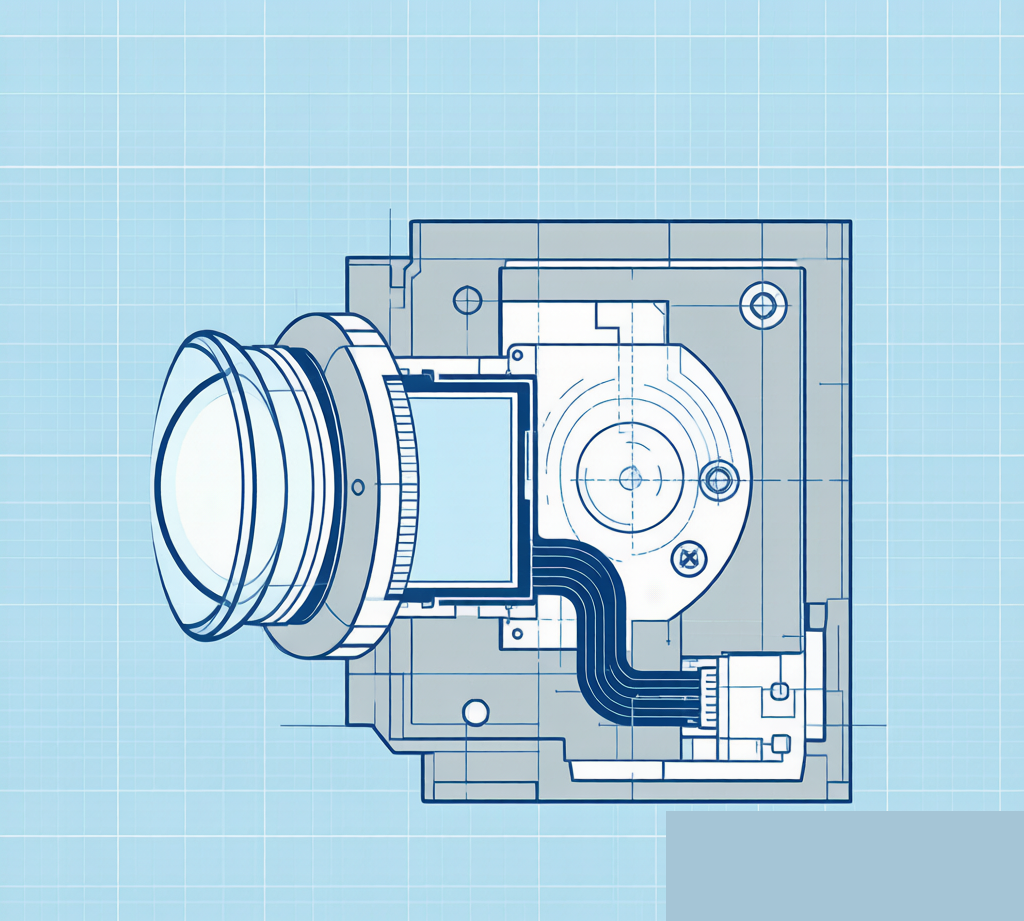
Why it's a trap: Upgrading from 3MP/5MP to 8MP is not merely a pixel count increase — it's a full reconstruction of the module assembly precision system. An 8MP sensor has approximately 3840×2160 effective pixels with pixel sizes typically in the 1.0-1.4μm range, placing an order-of-magnitude higher demand on Active Alignment (AA) precision between lens and sensor. The tolerance windows for concentricity deviation and parallelism deviation shrink by approximately 40% compared to 5MP modules.
Where the trap lies: Many module manufacturers accumulated mature processes during the 5MP era, but directly applying 5MP AA equipment parameters and calibration procedures to 8MP will cause widespread yield fluctuations during early mass production. Typical symptoms include: uneven corner resolution, edge chromatic aberration exceeding limits, and focal shift after high-temperature drop. These issues may not surface during small-batch pilot runs, but once production ramps to 100K+ monthly, a yield drop from 92% to 85% represents losses in the hundreds of thousands.
How to break it: First, require module manufacturers to provide 8MP-level AA equipment capability index (Cpk) data, with Cpk recommended at ≥1.67. Second, mandatory "high-temperature + vibration" combined stress AA stability testing during acceptance — not just room-temperature alignment precision. Third, introduce optical simulation models to simulate AA tolerance allocation during module design, proactively identifying sensitive dimensions. Fourth, implement enhanced SPC monitoring for the first 2,000 units during ramp-up, tracking AA drift trends on each production line to achieve "pre-warning before yield collapse" rather than "investigation after yield crashes."

Why it's a trap: With Bosch's first MPC4 project entering production in Q3, the time window available for module manufacturers to complete automotive-grade reliability verification is significantly compressed. 8MP front-view modules require AEC-Q104 automotive certification, covering high-temperature storage (125°C/1000h), temperature cycling (-40°C to +85°C/500 cycles), mechanical vibration (20G RMS/3 axes × 8 hours each), and other test series. The standard process requires 16-20 weeks, while project timelines may allow only 12.
Where the trap lies: When time runs short, the most dangerous approach is "reducing sample sizes" or "skipping intermediate checkpoints and going straight to final testing." On the surface, tests pass — but statistical confidence is severely inadequate. The probability of detecting a 0.5% defect rate differs enormously between 20 samples and 200 samples. A more hidden risk lies in the thermal characteristics of 8MP modules: higher pixel density brings greater power consumption, with internal temperature rise approximately 15-25% higher than 5MP. If thermal design margin is insufficient, high-temperature long-term reliability carries hidden risks.
How to break it: First, lock in the reliability test plan (DVP&R) at project kickoff, defining sample sizes and acceptance criteria for each test item — no subsequent compression allowed. Second, adopt a "parallel verification" strategy — executing independent test items (temperature cycling, mechanical vibration, humidity storage) in parallel across different sample batches rather than serial queuing, compressing total cycle time by 30%. Third, for 8MP module thermal characteristics, add two specific tests: "full-power temperature rise test" and "high-temperature full-load burn-in," ensuring thermal design margin ≥15°C. Fourth, proactively secure scheduling with AEC-Q certification labs to avoid being unable to book capacity during peak season.
Why it's a trap: 10-million-unit orders cannot be fully absorbed by a single module manufacturer — automakers inevitably demand multi-sourcing. But multi-source does not equal multi-buy: the same 8MP module produced by different module manufacturers may exhibit differences in optical performance consistency, image quality deviation, and even ISP calibration parameters. This means "nominally the same camera" may produce imaging differences across suppliers, which in turn affects ADAS algorithm perception consistency.
Where the trap lies: The most easily overlooked issue is "Golden Sample drift." A golden sample is defined as the standard at project outset, but Factory A and Factory B each calibrate to slightly different baselines. As mass production progresses, products from both factories gradually drift in their own directions. When ADAS algorithms perform inconsistently across different vehicle batches, root cause investigation costs are extremely high — you need to simultaneously check sensor batches, lens batches, AA process differences, and ISP calibration deviations, like searching for a needle in a haystack.
How to break it: First, explicitly define "optical consistency limits" in procurement specifications — requiring all suppliers to maintain MTF curve deviation ≤5% in center region and ≤10% at edges, with color reproduction Delta E ≤3. Second, establish a "cross golden sample" mechanism — Factory A and Factory B exchange 10 modules monthly for cross-measurement to monitor drift trends. Third, require all suppliers to use the same AA equipment model or at minimum the same precision class, reducing systematic bias introduced by equipment differences. Fourth, introduce "adaptive compensation" at the ISP calibration stage — embedding individual compensation parameters at module shipment, allowing downstream ISP to fine-tune based on each module's characteristics, smoothing out inter-supplier differences at the system level.
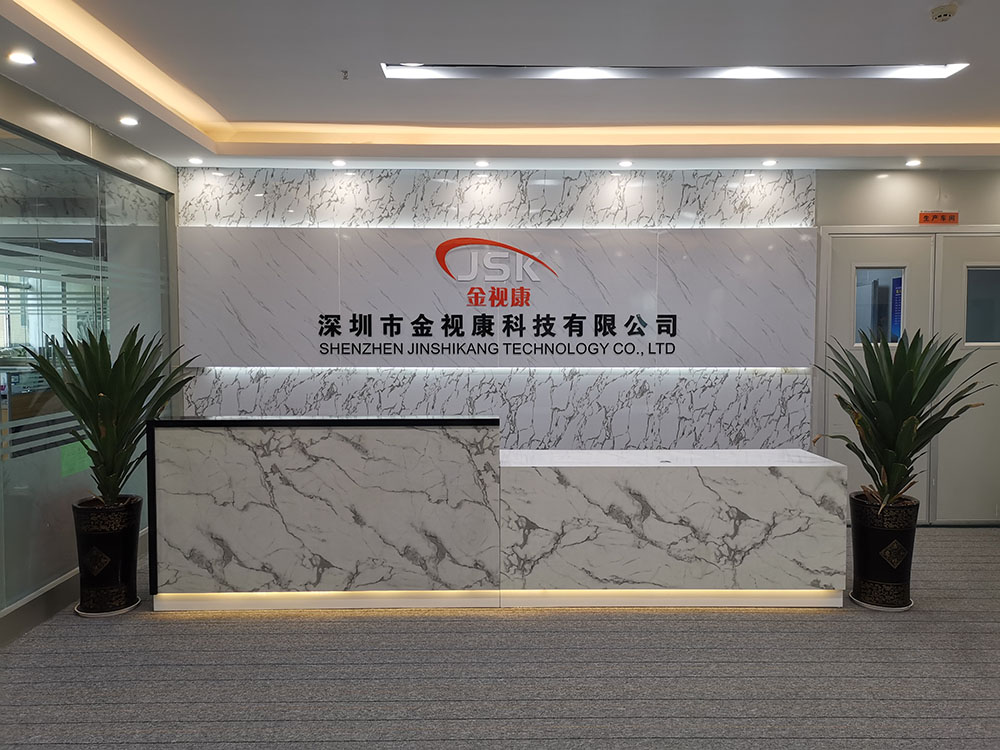
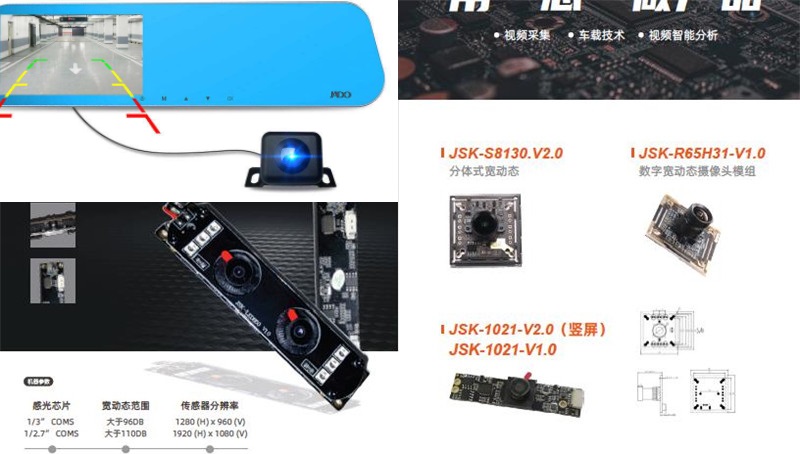
The entry of 8MP front-view cameras into the 10-million-unit era is both proof of industry maturity and a comprehensive test of module supply chain capabilities. Jinshikang Technology specializes in camera module OEM/ODM manufacturing, covering consumer electronics through automotive applications, with 8MP-level AA assembly capability and automotive-grade reliability verification systems, providing overseas clients with one-stop module supply solutions from prototyping to mass production.


AR0230---1/2.7 HD 2M Wide Dynamic
Fatigue Monitoring Camera Module
Motion DV Camera-720P-120 Degree Wide Angle Camera Module
Night Vision Monitoring Camera Module
Monitoring - Doorbell - Law Enforcement Instrument Camera Module
Ten Thousand Trillion Industrial Camera Camera Module
 13423810014
 0755-29433686
 daming@cameras-module.com
 2/F, Building H, Zhiyihan Industrial Park, Yuanling Village, Shiyan Town, Baoan District, Shenzhen 518108



We use cookies to enhance your browsing experience. Continuing to browse indicates that you agree to our cookie policy.