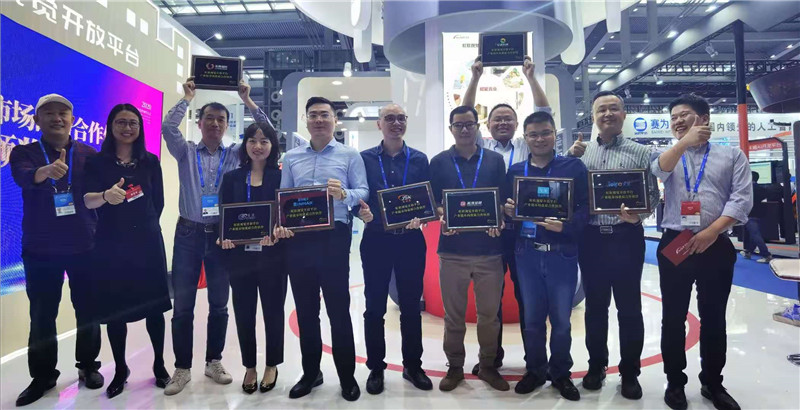
On November 6, 2026, at the 9th China International Import Expo (CIIE) Canada Pavilion, global Tier 1 supplier Valeo and BlackBerry's QNX business jointly launched a new-generation intelligent front-view camera platform. The platform deeply integrates the QNX OS for Safety functional safety operating system with Valeo's ADAS software stack and SoC hardware, and has already secured design wins with multiple Chinese automakers, with mass production expected to begin within 2026. This means that the front-view perception system — once integrated piecemeal by OEMs — is now being delivered by Tier 1 suppliers as a turnkey package combining "hardware + operating system + complete ADAS algorithm stack." For overseas OEM/ODM procurement and hardware engineers, this is not just another product launch. When the intelligent front-view camera evolves from an "independent sensing component" into a "pre-integrated turnkey module," the decision authority, responsibility boundaries, cost structure, and second-source strategy for module selection will all be redefined. This article outlines five new traps that procurement teams must navigate.
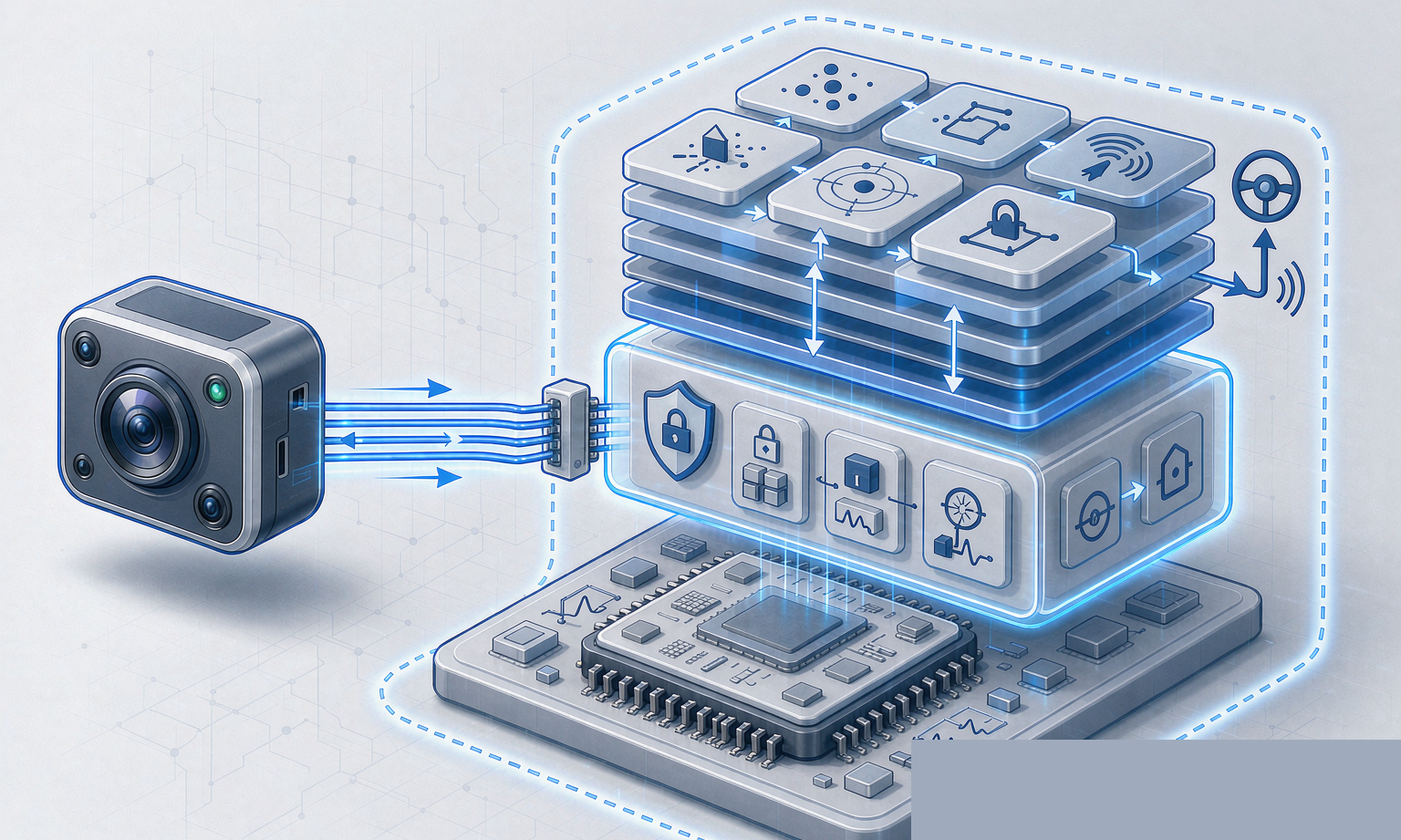
1. Functional Safety Certification Boundary: ASIL Ratings Do Not Automatically Extend to Module Hardware
Why It Is a Trap
Turnkey platforms advertise "blanket functional safety certification coverage," and procurement teams may assume that choosing a turnkey solution eliminates the need to manage the camera module's own safety certification. In reality, QNX OS for Safety certification covers the operating system layer (typically ASIL-B/D), and does not automatically extend to the camera module hardware.
Where the Trap Is
- The module's image output quality, timing determinism, and failure modes (such as black screen, screen tearing, frame loss, exposure anomalies) still require independent FMEA (Failure Mode and Effects Analysis) and ASIL safety decomposition
- When OEMs build their Safety Case, the camera module is traced as an independent safety item — module failure cannot be masked by the OS
- In some Tier 1 platform-level certification documents, the module hardware is listed only as a "peripheral device," leaving safety responsibility ambiguously defined
How to Break Through
- During selection, require the Tier 1 to issue an explicit "module safety responsibility boundary statement" distinguishing OS certification scope from module hardware certification scope
- The module specification must include a failure mode list (black screen / screen tearing / frame loss / exposure anomaly) with corresponding detection and reporting mechanisms
- Require the module supplier to provide an ISO 26262 functional safety compliance statement or FMEDA report, rather than relying solely on the Tier 1's platform-level certification
2. OS Binding Creates SoC and Module Lock-in Risk
Why It Is a Trap
Turnkey platforms are typically deeply bound to a specific SoC and a specific OS version. If procurement focuses only on "it runs" and ignores the platform's technical lock-in, replacing the module or SoC later will incur massive rework costs.
Where the Trap Is
- QNX OS for Safety is strongly bound to specific SoCs (such as NXP, Qualcomm, TI) via BSP — the module's MIPI CSI-2 interface configuration, timing parameters, and ISP drivers are all optimized for that SoC, and switching SoCs requires full re-adaptation
- Once an OEM wants to change the SoC platform or upgrade to a new OS major version, the original module's driver adaptation, ISP tuning, and functional safety re-certification all need to be redone, with cycles reaching 6-12 months
- Some Tier 1 turnkey solutions include "designated single source" clauses for module models, restricting procurement's second-source options and bargaining power
How to Break Through
- Include a "module interface standardization" clause in contracts: MIPI CSI-2 D-PHY/C-PHY specifications, I2C control protocols, and timing parameters must comply with industry-standard specifications, not Tier 1 proprietary protocols
- Require the Tier 1 to provide a "module replacement interface document" defining the minimum work set needed for re-adaptation when swapping modules, lowering the barrier for second-source introduction
- Retain at least one generic module interface solution not bound to a specific OS/SoC as a second-source backup, ensuring supply chain flexibility
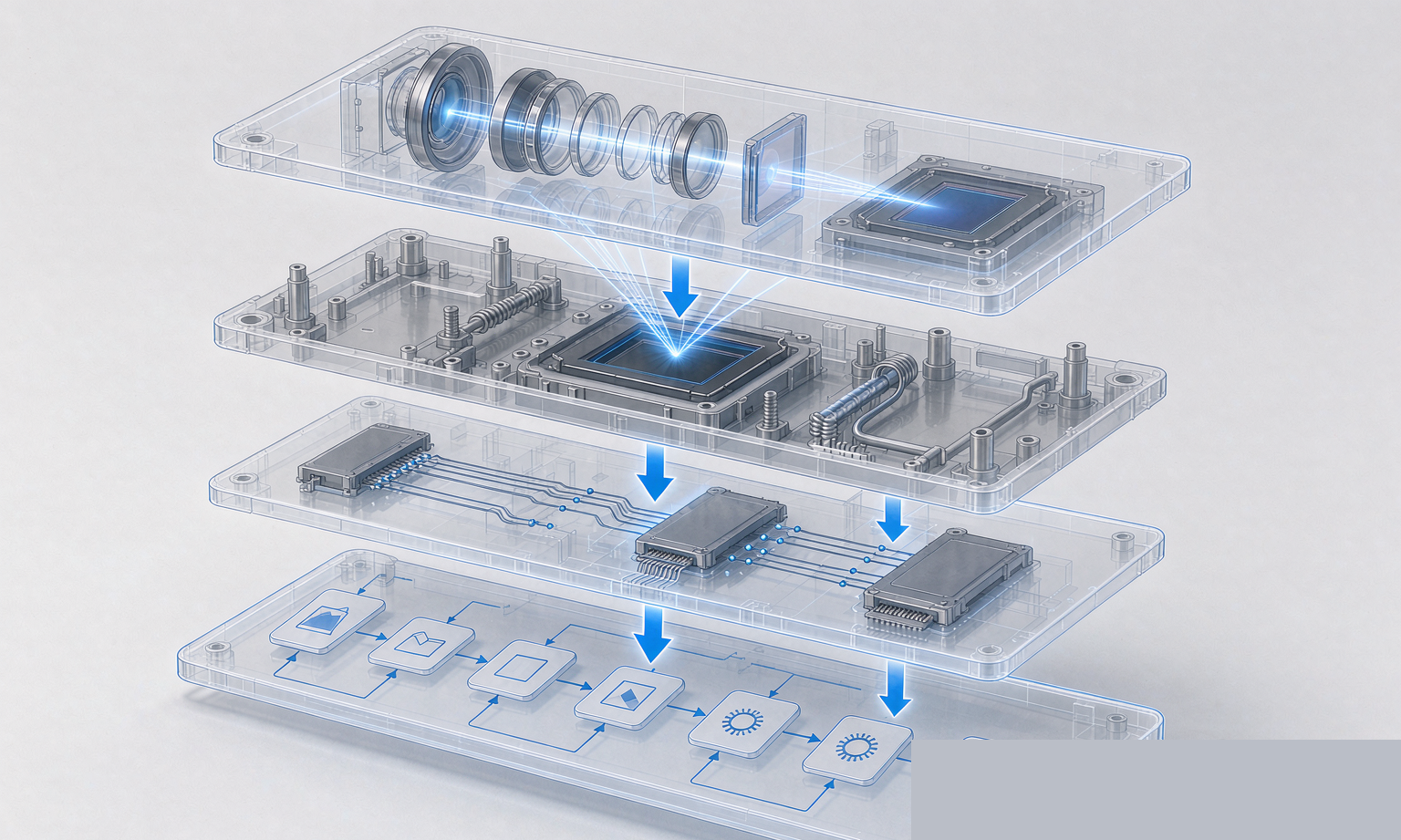
3. Module Replaceability Trap Under Turnkey Platforms: Four-Layer Adaptation Is Non-Negotiable
Why It Is a Trap
Turnkey solutions make "swapping a module" look like "swapping a part," but in reality it involves optical, mechanical, electrical, and software adaptation layers — any mismatch can invalidate the platform's functional safety certification or degrade perception performance.
Where the Trap Is
- Optical layer: lens FOV, distortion curve, and MTF differ — the ADAS algorithm's object detection calibration becomes invalid, requiring new training data collection
- Mechanical layer: module dimensions, mounting surface, and optical axis reference differ — requiring new production-line calibration and wheel alignment correlation
- Electrical layer: MIPI CSI-2 lane configuration, power sequencing, and power consumption differ — potentially triggering SoC power management anomalies or signal integrity issues
- Software layer: ISP parameters, exposure control strategy, and white balance algorithms differ — changes in image output characteristics directly affect downstream perception algorithm performance
How to Break Through
- Build a "module replaceability matrix" during selection, evaluating each candidate second-source module across all four layers and quantifying the adaptation workload per layer
- Require the Tier 1 to provide a "module replacement regression test checklist" defining the minimum test set that must be re-run after module replacement (including functional safety critical scenarios)
- For ASIL-B/D functional safety critical scenarios, module replacement must include re-running confirmation testing of the relevant items — functional verification alone is insufficient before volume production
4. BOM Cost Transparency Under Software Stack Integration: Module Unit Price Is Not Total Cost
Why It Is a Trap
Turnkey platforms bundle hardware, OS royalties, and ADAS algorithm stack into a single quote. The "module unit price" procurement sees may reflect only part of the true cost — hidden software royalties and integration service fees make total cost incomparable and uncontrollable.
Where the Trap Is
- QNX OS for Safety charges a runtime royalty per shipped device — this fee may be embedded in the overall platform quote rather than the module BOM, making it difficult for procurement to isolate
- ADAS algorithm stack licensing fees and Tier 1 integration engineering charges (NRE) are typically priced separately and do not appear in the module BOM, but directly impact total project investment
- When procurement wants to replace the Tier 1's designated module with an independent module supplier, they discover that the module savings are far insufficient to cover software re-integration costs — derailing cost reduction plans
How to Break Through
- Require the Tier 1 to provide a "fully itemized cost breakdown": hardware BOM, OS royalty, algorithm licensing, and integration NRE listed separately, rather than bundled into one "platform price"
- Build an internal Total Cost of Ownership (TCO) model that aggregates module price differences, software re-integration costs, functional safety re-certification costs, and production line re-calibration costs for comparison
- When evaluating independent module supplier solutions, simultaneously account for the software adaptation engineering required — avoid underestimating total cost by looking only at module unit price
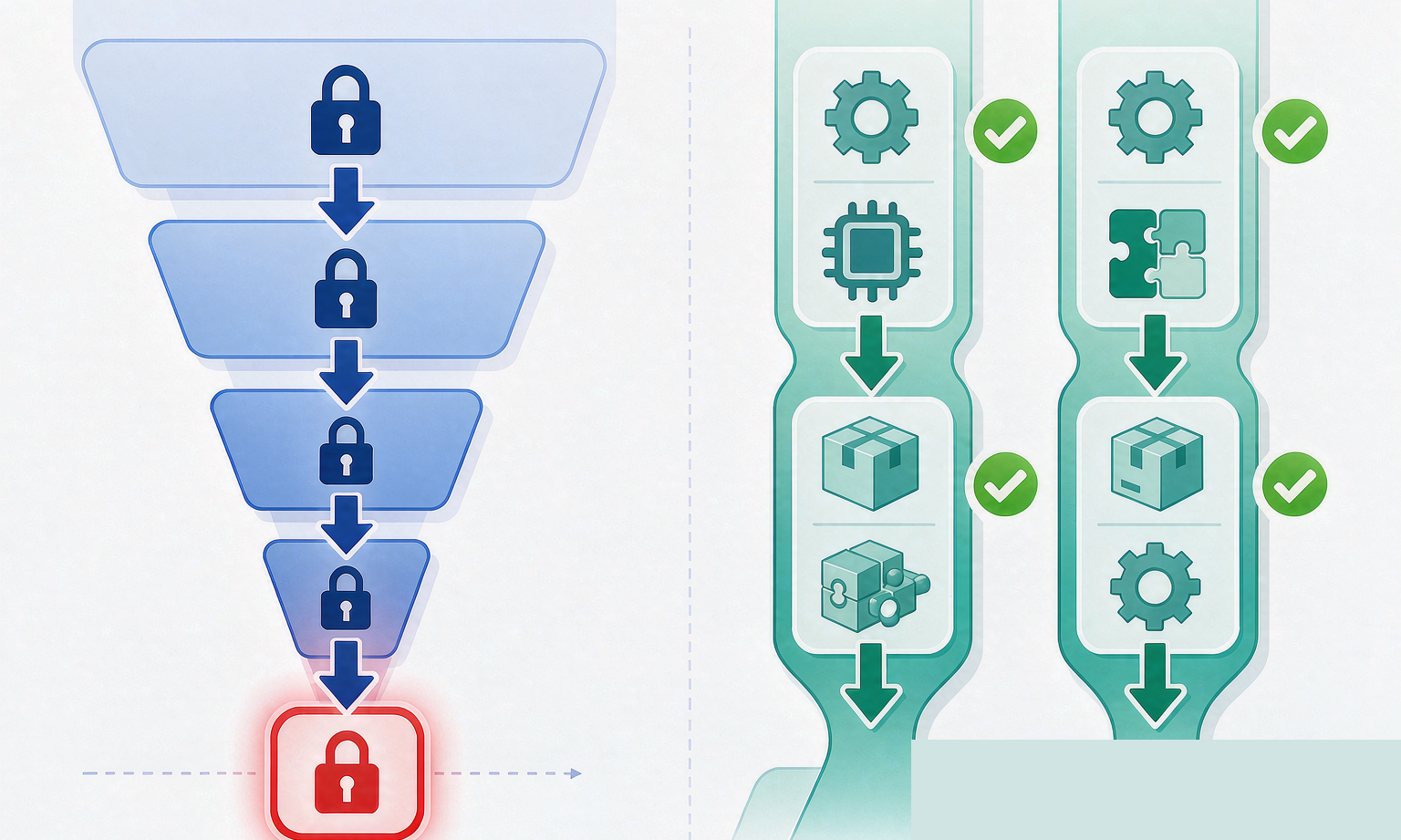
5. Second-Source Strategy: Retaining an Independent Module Procurement Channel Outside the Tier 1 Turnkey Solution
Why It Is a Trap
OEMs hand the entire front-view camera system to a Tier 1 for convenience, only to discover years later that when they want to introduce a second source for cost reduction or supply risk mitigation, there is no independent module procurement channel — they are deeply locked into the Tier 1.
Where the Trap Is
- Turnkey platform modules are typically supplied by the Tier 1 internally or through designated suppliers — the OEM has no direct module BOM control or supplier management authority
- When the Tier 1 encounters capacity bottlenecks, price increases, technology roadmap disagreements, or geopolitical supply chain risks, the OEM lacks rapid switching capability
- Some Tier 1s include contract clauses restricting the OEM's right to independently procure modules, creating de facto exclusive lock-in
How to Break Through
- During contract negotiation, explicitly include an "OEM retains independent module procurement right" clause, allowing second-source module introduction provided interface specifications are met
- During selection, simultaneously evaluate 2-3 independent camera module suppliers (such as JSK Technology and other OEM/ODM-capable manufacturers) for interface compatibility and mass production capability
- Establish a module validation and introduction process ensuring that second-source modules can complete four-layer adaptation and functional safety confirmation testing within 6-9 months, forming an executable switching contingency plan
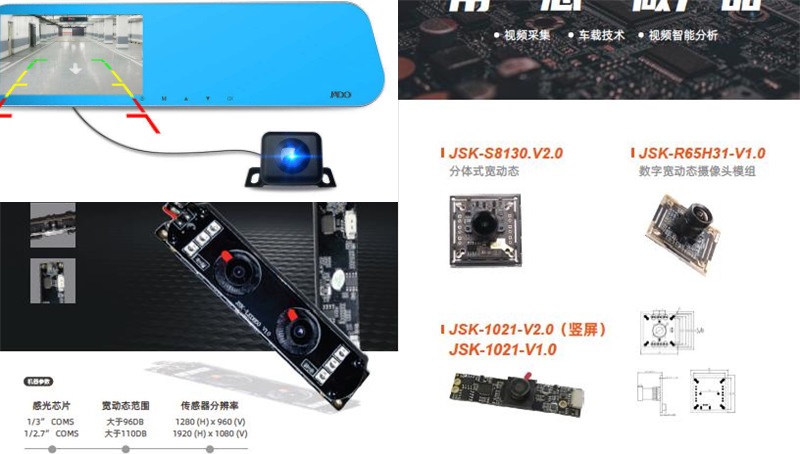
JSK Technology (Jinshikang) specializes in camera module OEM/ODM manufacturing, covering consumer electronics, automotive, security, and industrial inspection applications. In the era of turnkey front-view camera platforms, we provide overseas OEM/ODM customers with automotive camera module solutions featuring standardized interfaces, traceable functional safety, and second-source-ready design — helping procurement retain a flexible independent module procurement channel amid Tier 1 lock-in.
Front-View Camera Turnkey Platform Selection FAQ
Q1: Will turnkey intelligent front-view camera platforms completely replace independent module procurement?
No. Turnkey solutions suit OEMs with limited R&D resources seeking rapid mass production; for OEMs with in-house ADAS capabilities pursuing cost control and supply chain flexibility, independent module procurement remains mainstream. Both models will coexist long-term — procurement should choose based on their own R&D capabilities and strategy.
Q2: After adopting a turnkey platform, does the OEM still need to do its own functional safety certification?
Yes. The Tier 1's platform-level certification covers the OS and algorithm stack layers — the OEM still must perform vehicle-level Safety Case analysis, module hardware FMEA, and system integration confirmation testing, and bears the ultimate safety responsibility. Platform certification does not replace vehicle-level certification.
Q3: Can independent camera module suppliers be compatible with QNX OS for Safety?
Yes, provided the module's MIPI CSI-2 interface, I2C control protocol, and timing parameters comply with the QNX SoC platform's BSP requirements. The module supplier must provide complete interface specification documentation and driver adaptation support, cooperating with the Tier 1 or OEM to complete integration verification.
Q4: How long does it take to introduce a second-source module?
It depends on the functional safety level. Non-safety-critical scenarios take about 3-6 months; ASIL-B/D critical scenarios require 6-12 months, including optical calibration, electrical adaptation, ISP tuning, and functional safety confirmation testing. Plan ahead to avoid emergency switching.
Q5: How much more expensive is a turnkey platform's module unit price compared to independent procurement?
Because the platform bundles OS royalties, algorithm licensing, and integration services, module quotes cannot be directly compared. Use a TCO (Total Cost of Ownership) model to evaluate total cost — comparing module unit prices alone is misleading.


 13423810014
 0755-29433686
 daming@cameras-module.com
 2/F, Building H, Zhiyihan Industrial Park, Yuanling Village, Shiyan Town, Baoan District, Shenzhen 518108