On November 12, 2026, Samsung Electronics, together with Google, Gentle Monster, and Warby Parker, launched its first AI smart glasses, Intelligent Eyewear, in New York and opened pre-orders. The product goes on sale December 10 in the United States and South Korea. It features a 12MP HDR ultra-wide camera, weighs about 41 grams, offers 9 hours of battery life, and starts at $395. Around the same time, Ray-Ban Meta's third-generation product entered Indonesia and other Southeast Asian markets. This marks AI smart glasses officially transitioning from the "concept launch" stage to the "scaled retail" stage.
For overseas OEM/ODM procurement and hardware product managers, this is a clear signal: the focus of AI glasses camera module sourcing must shift from "concept-stage parameter comparison" to "mass-production-stage delivery assurance." The concept stage is about sensor megapixels, module thickness, and power consumption; the mass-production stage is about yield stability, supply chain lock-in capability, certification cycle control, and dual-source interchangeability. The latter determines whether an AI glasses product can hit shelves on time and survive million-unit shipments. Below are 5 new pitfalls that procurement teams must watch for when sourcing miniature camera modules in the mass-production stage.
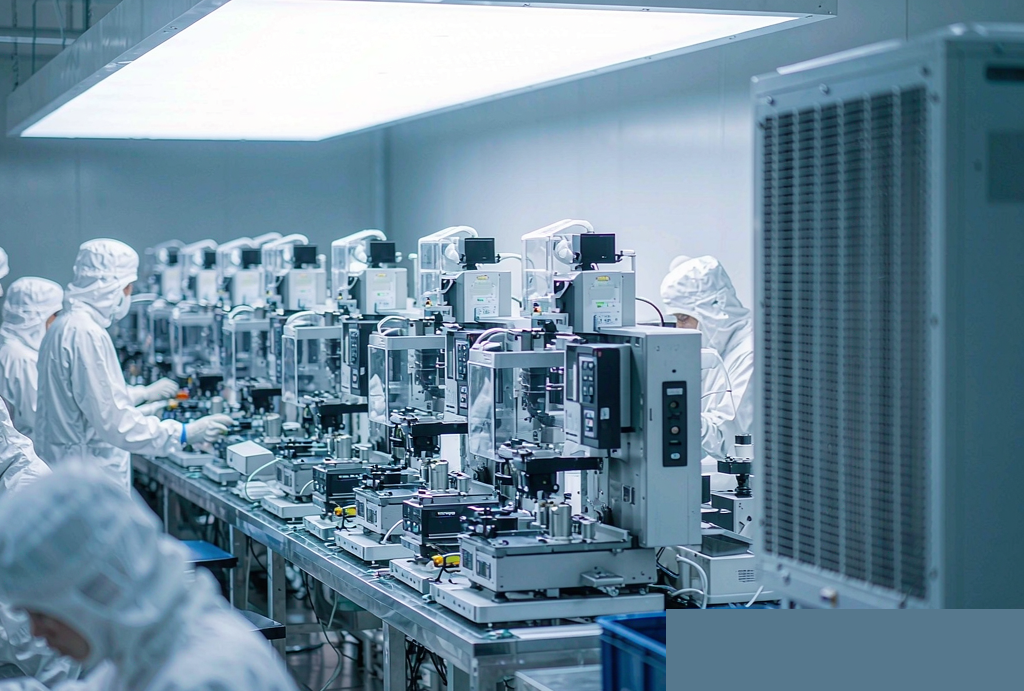
Why it is a pitfall: AI glasses camera modules are an order of magnitude smaller than phone modules, with Z-axis height often compressed below 3.5mm. The small lens aperture, large f-number, and short focal length impose extreme precision requirements on the AA (Active Alignment) process. During the engineering sample stage, the line can work slowly and achieve yields above 95%; once mass-production ramp-up begins and the cycle time is compressed from 30 seconds per piece to 8 seconds per piece, yield may cliff-drop to 70% or lower.
Where the pitfall lies: Many procurement teams sign mass-production contracts based only on the engineering sample yield report provided by the supplier. When yield falls short during ramp-up, the supplier either demands price reductions to cover material costs (cost pass-through), delays delivery (capacity dragged down by yield), or quietly loosens outgoing quality standards (shipping defective units). In all cases, procurement takes the blame.
How to break it:
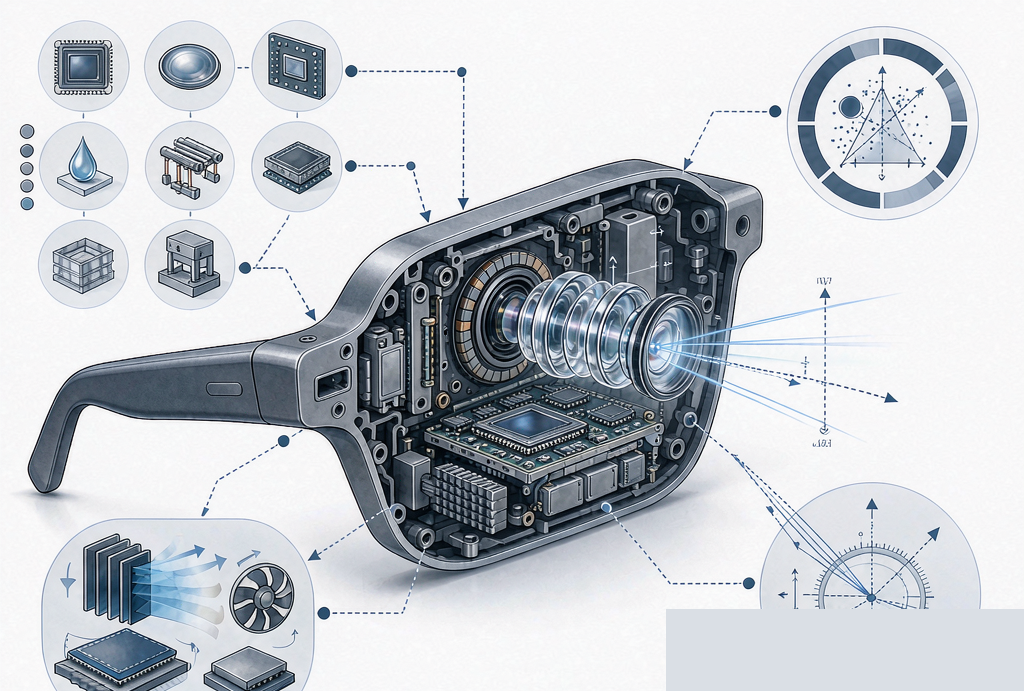
Why it is a pitfall: The mainstream AI glasses solution has converged on 12MP ultra-wide (about 120-140 degree field of view), and the corresponding CIS chips and lenses are not generic components. On the CIS side, fewer than 5 global suppliers can provide 12MP small-format (1/3 inch or below) consumer-grade solutions; on the lens side, ultra-wide plastic lens aspheric mold cycles run 3-6 months. When a hot product triggers a wave of follow-on orders (such as Samsung's AI glasses launch driving copycat demand), upstream CIS and lens capacity gets priority-locked by large customers, and smaller buyers cannot get supply.
Where the pitfall lies: Procurement plans the project based on standard component lead times (8-12 weeks), but CIS lead times stretch to 20-26 weeks and lens mold slots are booked 6 months out, stalling the entire project over a single chip. A more hidden pitfall: the supplier verbally promises stock, but in reality there is a "large-customer priority tier" and your orders are always last in line.
How to break it:
Why it is a pitfall: AI glasses are face-worn wireless devices involving Bluetooth, Wi-Fi, CE/FCC/ISED radio compliance, SAR (Specific Absorption Rate) human radiation safety, and privacy compliance (camera indicator lights, face anonymization). The module itself may carry AEC-Q100 (if automotive-grade) or JEDEC reliability certification, but these do not replace system-level certification. System certification typically takes 3-6 months, and if the module fails at the certification stage, the entire project goes back to square one.
Where the pitfall lies: Procurement assumes that the supplier's certification report means everything is fine, but during system-level testing the module's electromagnetic emissions exceed limits, or the camera indicator light fails local privacy regulations (such as EU GDPR-derived requirements), forcing a module change and redoing all prior certifications. Samsung's Intelligent Eyewear implemented a triple privacy defense of LED indicator plus occlusion-triggered auto-shutoff plus face anonymization; this design is key to passing certification, and many smaller vendors have not done this.
How to break it:
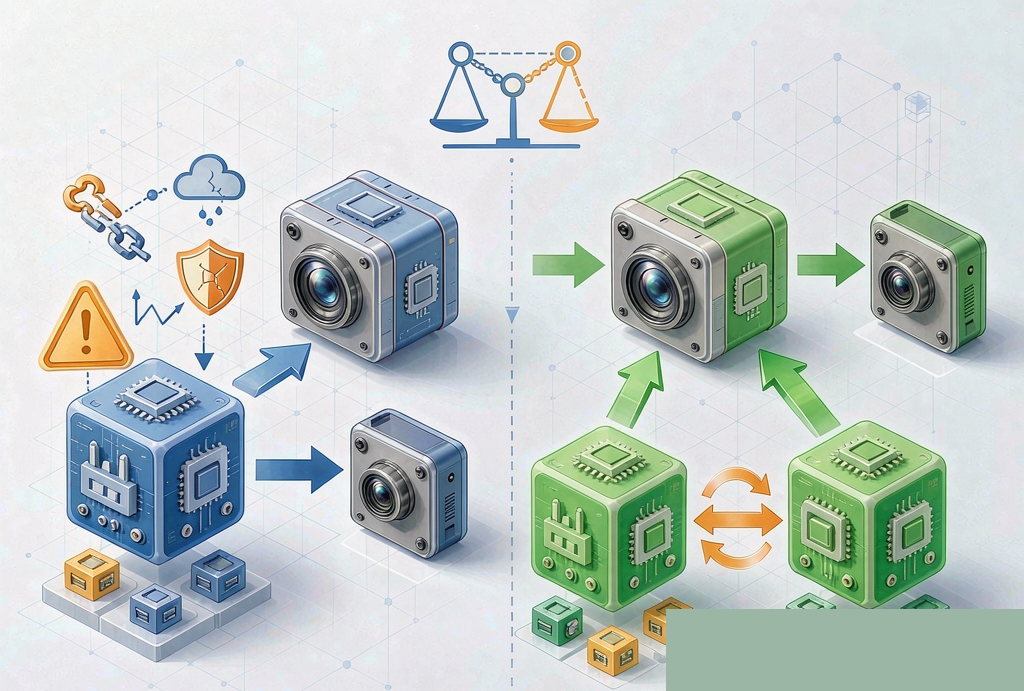
Why it is a pitfall: Mass-production procurement teams all run dual-source strategies, but AI glasses camera modules carry a trap: both suppliers claim compatibility with the same CIS and lens specs, but in mass production, differences in AA process, lens assembly tolerances, and ISP tuning parameters can produce visibly different imaging consistency. Color shift, white balance drift, and distortion differences are amplified in the first-person-view capture scenario of AI glasses.
Where the pitfall lies: Procurement certifies both sources and both pass sample validation. During mass production, Source A ships 100,000 units without issue, but after switching to Source B, users complain of "yellowish images" and "blurry edges." Investigation reveals Source B's lens assembly tolerance is 0.05mm larger than Source A's, and its AA equipment precision is a tier lower. Switching back to Source A, capacity is now booked 3 months out.
How to break it:
Why it is a pitfall: AI glasses cameras are worn against the temple and nose bridge, with operating environment temperatures spanning 0 degrees C outdoors to 40 degrees C in a sun-baked car. The optical center calibrated during the AA process may shift after temperature cycling, causing imaging center-point drift and edge resolution degradation. This issue is not obvious during the engineering sample stage (few samples, no temperature cycling), but in mass production with million-unit shipments, the after-sales return rate is amplified by thermal drift.
Where the pitfall lies: Procurement only accepts room-temperature imaging quality without temperature-cycled consistency validation. After launch, winter users in cold regions report "blurry photos," summer users in hot regions report "soft edges," and investigation reveals the AA adhesive shrinks at low temperatures and softens at high temperatures, shifting the optical center by 0.1-0.3mm. This problem cannot be fixed by software compensation; it requires full-device return and repair.
How to break it:
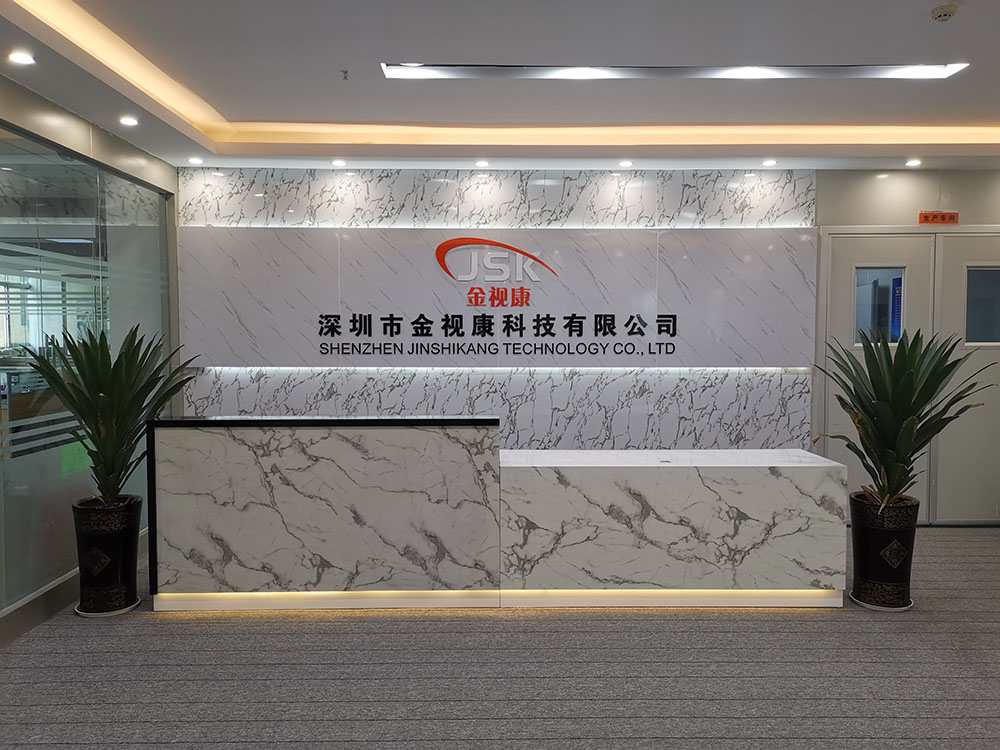
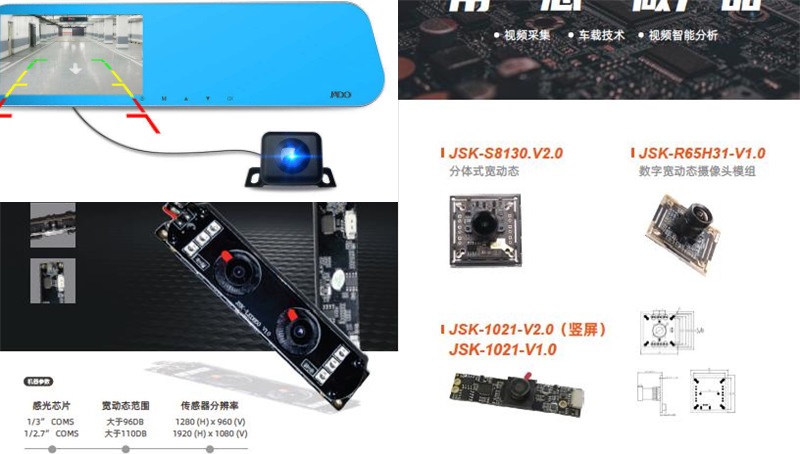
As AI smart glasses move from concept to mass-production retail, the sourcing logic for camera modules must also upgrade from "parameter sourcing" to "mass-production control sourcing." Yield, supply chain, certification, dual-source consistency, and thermal drift — each of these 5 new pitfalls can turn a "concept hit" into a "mass-production disaster." Overseas OEM/ODM procurement teams must incorporate these 5 dimensions into the supplier audit checklist at project initiation, not patch them up during ramp-up. Jinshikang Technology is deeply engaged in the camera module field, covering consumer electronics, wearable, automotive, and industrial inspection applications, accepting OEM/ODM orders with AA process precision control and mass-production consistency assurance, providing stable module delivery for overseas customers' AI glasses and wearable vision projects.
The industry average is 75%-85%, with top-tier module makers achieving 90% or above. Yield correlates directly with module size: ultra-thin modules with Z-axis height of 3.5mm or below typically have yields 10-15 percentage points lower than standard phone modules due to AA alignment difficulty. Procurement should require suppliers to provide CPK data under mass-production cycle time, with CPK of 1.33 or higher as the baseline threshold.
Normal lead time is 12-16 weeks, stretching to 20-26 weeks during capacity crunches. The mainstream 12MP 1/3-inch CIS solutions for AI glasses are concentrated among a few suppliers such as Sony, OmniVision, and onsemi; locking capacity 6 months ahead is recommended. If the project allows, downgrading to an 8MP solution significantly eases chip supply.
Run four quantitative comparisons: Delta E color consistency (target Delta E 3 or less), MTF50 consistency (deviation 10% or less), distortion consistency (deviation 5% or less), and white balance consistency (color temperature deviation 200K or less). Each supplier provides at least 100 mass-production samples for statistical analysis, not just engineering samples. Complete consistency validation during the certification stage, not during mass-production switching.
Refer to the JEDEC JESD22-A104 temperature cycling standard: test conditions of -20 degrees C to +60 degrees C, 15 minutes dwell at each extreme, transition time 1 minute or less, 100 cycles. Post-test checks: optical center shift (0.05mm or less), MTF degradation (10% or less), no adhesive cracking. AI glasses worn on the face and used outdoors require stricter thermal drift standards than general consumer electronics.
Multi-CIS compatibility is feasible at the hardware level (the same PCB layout accommodating different CIS pinouts), but ISP tuning and optical matching must be done separately for each CIS. Require the supplier to provide complete tuning data and samples for at least two CIS chips to validate compatibility. A mature supplier should complete second-CIS switch validation within 2 weeks; otherwise "multi-CIS compatibility" is just a paper claim.


AR0230---1/2.7 HD 2M Wide Dynamic
Fatigue Monitoring Camera Module
Motion DV Camera-720P-120 Degree Wide Angle Camera Module
Night Vision Monitoring Camera Module
Monitoring - Doorbell - Law Enforcement Instrument Camera Module
Ten Thousand Trillion Industrial Camera Camera Module
 13423810014
 0755-29433686
 daming@cameras-module.com
 2/F, Building H, Zhiyihan Industrial Park, Yuanling Village, Shiyan Town, Baoan District, Shenzhen 518108



We use cookies to enhance your browsing experience. Continuing to browse indicates that you agree to our cookie policy.